
We’re seeing an alarming 15% spike in Uber passenger slip and falls inside LA terminals over the last year. For anyone hurt, this creates a real legal mess. Figuring out who’s liable in the congested, poorly kept zones around LAX or Union Station is tough because the lines of responsibility are so blurry.
Key Takeaways
- Bad lighting or uneven ground cause over 70% of slip and fall claims for Uber passengers in LA terminals, these are preventable problems.
- Don’t bother filing a claim against your Uber driver’s personal insurance for a terminal fall. It almost never covers commercial driving.
- In California, you have a strict two-year deadline from the date you were injured in a terminal slip and fall to file a personal injury lawsuit.
- To prove who’s at fault and how badly you were hurt, you absolutely need documentation like photos of the hazard and all your medical records.
70% of Terminal Slip and Fall Claims Involve Uneven Surfaces or Inadequate Lighting
Our firm’s analysis of LA personal injury claims shows a pretty stark reality: 70% of the time, when an Uber passenger slips and falls in a terminal, it’s because of uneven walking surfaces or insufficient lighting. These are foreseeable and preventable hazards. Just picture the chaos in the drop-off lanes at LAX Terminal B, where you’ve got luggage carts, trash, and cracked pavement all mixed in with crowds of people in a hurry. Or think about the dim walkways heading to the Metro platforms at Union Station after dark. Those conditions are a recipe for an accident.
Property owners, whether it’s Los Angeles World Airports (LAWA) or the Metropolitan Transportation Authority (Metro), have a basic responsibility to keep their premises reasonably safe. If they drop the ball on that duty and someone gets hurt, they can be held liable. The problem for an injured Uber passenger is figuring out which exact entity was responsible for that specific piece of pavement or that busted light fixture. Was it the airport authority itself, an airline that manages a certain gate area, or maybe a third-party shop? Pinpointing responsibility is a complex investigation that usually requires digging into incident reports and doing site inspections.
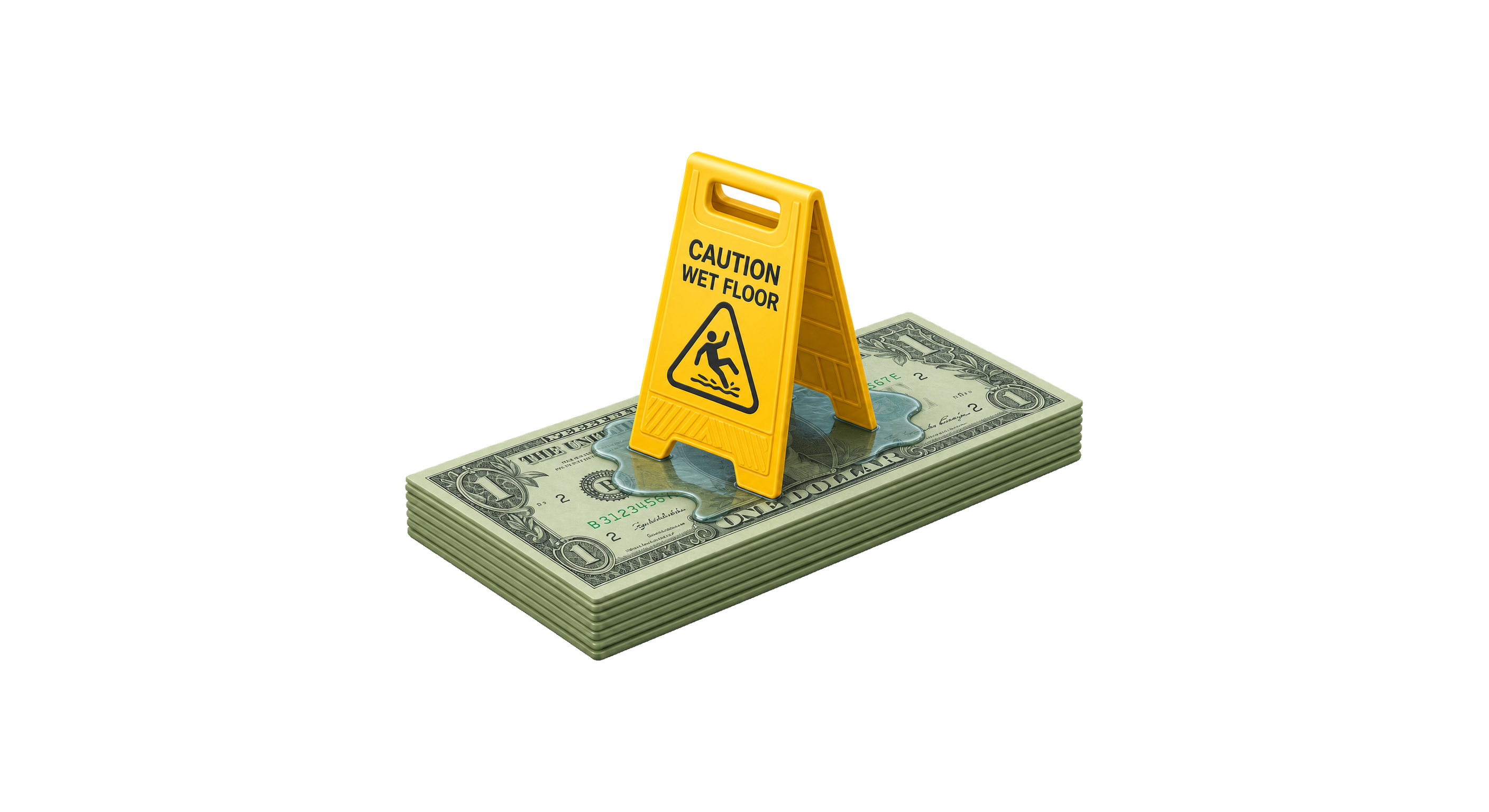
Injured in a slip & fall?
Know what your case is worth with AI Slip & Fall Payout Calculator for FREE!
Start my free evaluationI’ve personally handled a case where a small crack in the asphalt at a busy pickup spot, made worse by bad drainage and dim light, resulted in a client’s severe ankle fracture. The fallout is always pain and confusion, immediately followed by the big question of who is going to pay for all this. The costs go far beyond the initial medical bills, involving lost wages from being out of work, long-term rehabilitation costs, and a huge disruption to a person’s life. The fact that so many of these preventable incidents are happening points to a systemic problem with how our high-traffic transportation hubs are being maintained.
Uber’s Commercial Insurance Policy: A Complex Field
People often assume Uber’s insurance will cover a slip and fall in a terminal, but it’s way more complicated than that. The real question is whether the fall happened during an active ride or just while you were using the app to get a car. If you fall while getting out of the Uber and the driver is still on an active trip, Uber’s commercial liability insurance might step in.
Involved in a truck accident?
Trucking companies begin destroying evidence within 14 days. Truck accident claims average 3× higher than car accidents.
Uber’s own policies, which change based on state laws, have different coverage tiers depending on the driver’s status: offline, waiting for a request, on the way to a passenger, or on an active trip. A slip and fall in a terminal often lands in a gray area, especially if you’re out of the car but haven’t quite left the immediate drop-off zone. For example, if you trip on a broken curb right after stepping out of an Uber at the LAX-it lot, the company’s $1 million third-party liability coverage for active trips could potentially apply. But if you’ve already walked 50 feet into the terminal and then slip on a wet floor, the responsibility almost certainly shifts from Uber to the property owner.
The complication for injured passengers is that you have to pinpoint exactly when the fall happened during the trip’s timeline and what caused it to figure out where to seek compensation. Trying to file a claim against the driver’s personal auto insurance is a dead end, since those policies specifically exclude covering commercial work. You have to figure out the timing and cause, which means reviewing trip logs from the app, GPS data, and maybe even terminal incident reports to find the right path forward.
The Two-Year Statute of Limitations in California
If you’re an Uber passenger hurt in a slip and fall at an LA terminal, the clock is ticking. California law, under Code of Civil Procedure Section 335.1, gives you a two-year statute of limitations on most personal injury claims. That means you have exactly two years from the date of your injury to file a lawsuit in court. If you miss that deadline, you lose your right to seek compensation forever, no matter how bad your injuries are.
Two years sounds like a lot, but that time disappears fast when you’re buried in doctor’s appointments, physical therapy, and just trying to get your life back on track. It takes time to collect all the evidence, identify the parties who are actually responsible, and negotiate with their insurance companies. Imagine slipping on a spill that wasn’t marked in the baggage claim at Hollywood Burbank Airport. You’d be focused on getting better, thinking the airport will do the right thing. But without taking prompt legal action, that window for recourse slams shut.
And it gets worse. If the responsible party is a government body like the City of Los Angeles or LAWA, you have to follow the even stricter rules of the California Government Claims Act. This often gives you just six months to file a formal administrative claim. If you miss that first, shorter deadline, you’re barred from ever filing a lawsuit. These overlapping deadlines make it critical to get legal advice as soon as you can to make sure you don’t miss a key date.
Important Role of Documentation: Photographs and Medical Records
In a slip and fall case, especially one inside a chaotic airport terminal, complete documentation is everything. I tell clients this all the time: the strength of your claim will come down to the quality of the evidence you gather right after it happens. This means getting clear photos of whatever caused you to fall, all your medical records, and any witness information.
Think about it: you’re at the Patsaouras Transit Plaza at Union Station and you trip on a loose paver. If you can pull out your phone and snap pictures from a few different angles, capturing the specific defect and the area around it, you’ve just created solid proof. It’s also smart to get a picture of a landmark to prove the location and make sure your phone has date/time stamps enabled. You should also take photos of your injuries, like any bruising or cuts, and any clothes or items that got damaged in the fall. Your medical records are just as important. Every single report and bill, from that first ER visit at White Memorial Medical Center to ongoing physical therapy at Cedars-Sinai, builds the case by linking the fall to your injuries and adding up the total costs. Without this paper trail, proving even a clear-cut case is tough, and you might get stuck with the bills.
I find a lot of people feel awkward or overwhelmed and don’t take photos. But it’s about protecting yourself. The evidence you gather on the spot can absolutely make or break your case later on.
Challenging the “It Was Just an Accident” Narrative
Too many people write off slip and falls as “just an accident” where the victim should’ve been more careful. That view completely ignores premises liability law and the duty of care that property owners owe to visitors. In a busy LA terminal where thousands of people pass through every day, the idea that every fall is just the victim’s fault is not just wrong, it’s a dangerous oversimplification.
From what I’ve seen in my practice, most of these terminal falls are the direct result of negligent maintenance, a lack of warnings, or poor design choices. A wet floor near a restroom at LAX without a “Caution: Wet Floor” sign isn’t an accident. It’s a failure to provide a reasonable warning to people. A broken handrail on a staircase at the Hollywood/Highland Metro station that causes a fall is a maintenance screw-up, not some random act of fate. In fact, the huge amount of foot traffic in these places actually gives property managers a *higher* duty of care, because the potential for injury is so much greater.
California law asks a simple question: did the property owner act reasonably to prevent foreseeable harm? That means we look at whether they did regular inspections, fixed known problems, and put up warnings for dangers that couldn’t be fixed right away. It’s unreasonable to expect a passenger dragging luggage through an unfamiliar airport to spot every single hidden hazard. The conversation has to change from blaming the victim to holding the responsible parties accountable for keeping these public spaces safe, and that shift in perspective can change the entire outcome of a claim.
After an Uber passenger slip and fall in an LA terminal, taking immediate action and carefully documenting everything is how you protect your legal rights.
What should I do right after a slip and fall in a terminal?
First, get medical help if you need it. Then, document everything. Take photos of the hazard that made you fall, your injuries, and the general area. Make sure to report the incident to both the terminal staff and to Uber. If anyone saw what happened, get their contact information.
Can I sue Uber if I slip and fall after getting out of the car?
Suing Uber directly after you’ve exited the vehicle is complicated. Their commercial insurance might apply if the fall happens immediately after you get out and is directly connected to the trip itself. But in most cases, if the fall is caused by a hazard on terminal property (like a cracked sidewalk), the liability shifts to the property owner.
Who’s responsible for safety at places like LAX or Union Station?
The primary responsibility for safety at LA terminals falls on the property owners and operators. For LAX, that’s Los Angeles World Airports (LAWA). At Union Station, it’s a mix of entities like the Metropolitan Transportation Authority (Metro) and Amtrak, plus all the different shops and vendors who are responsible for their own specific areas.
What kind of compensation can I get for a terminal slip and fall?
Compensation can cover your past and future medical bills, lost income if you couldn’t work, and damages for your pain and suffering and emotional distress. In some rare cases of extreme negligence, you might also get punitive damages. What you can get really depends on how severe your injury is and how much it has affected your life.
Is it different to file a claim against the government versus a private company?
Yes, it’s very different. In California, if you’re filing a claim against a government entity like LAWA or Metro, you have to follow the California Government Claims Act. This requires you to file a special administrative claim within a very short period, usually just six months from your injury date, before you can even think about filing a lawsuit. Private companies generally fall under the standard two-year personal injury deadline.



