
When a slip and fall on a wet floor in an Athens restaurant happens, a lot of what people think they know about their rights is just plain wrong. The reality of premises liability claims, especially when it comes to the notice requirement, is a lot trickier than what you hear on the street.
Key Takeaways
- The restaurant owner doesn’t have to personally see a spill for you to have a case. What they *should have known* (constructive knowledge) is often enough.
- Georgia law has no “five-minute rule” for how long a spill must be there. The key is whether a reasonable inspection would have found it in time.
- What you do right after you fall, reporting it, snapping photos, has a huge impact on how strong your claim will be.
- You need more than your own story. Evidence like security camera footage, witness info, and the restaurant’s own maintenance logs are what truly prove negligence.
- Even if you were partly to blame for your fall, Georgia’s modified comparative negligence rule (O.C.G.A. Section 51-12-33) lets you recover damages as long as you’re less than 50% at fault.
Myth 1: The Restaurant Owner Must Have Seen the Spill for You to Have a Case
This is probably the biggest myth out there: that an owner or employee has to physically see the wet spot for the restaurant to be on the hook. The law in Georgia is much more complicated. Having proof that someone saw the spill, which is called actual notice, definitely makes your case stronger, but you can also prove negligence through what’s called constructive notice.
Constructive notice just means the owner or their staff should have known about the danger. You prove this by showing the hazard was there long enough that a reasonable inspection should have caught it. Let’s say you’re in a busy restaurant downtown near the University of Georgia campus. A drink spills in a main walkway and sits there for an hour, with servers walking by constantly. That’s a strong argument for constructive notice. The whole case boils down to one question: what would a reasonably careful restaurant owner do to keep customers safe? The Georgia Court of Appeals has repeatedly backed this up, stating that property owners have a duty of ordinary care to keep their premises safe for customers, as spelled out in O.C.G.A. Section 51-3-1. That duty means they have to conduct reasonable inspections.
Injured in a slip & fall?
Know what your case is worth with AI Slip & Fall Payout Calculator for FREE!
Start my free evaluationProving constructive notice means digging into the restaurant’s own procedures. We look at their cleaning logs, how they train staff to handle spills, and how often they’re supposed to be checking different areas. If a restaurant’s policy says they check the bathrooms every 30 minutes but a leaky toilet creates a puddle that sits there for two hours, that gap between policy and reality is powerful evidence.
Myth 2: If You Don’t Fall Immediately After a Spill, You Can’t Claim It Was “Wet”
People get really hung up on the timing of a spill. They think if it wasn’t a brand-new puddle or if they managed to walk past it once without falling, they don’t have a claim. That’s not how it works. The issue isn’t the exact second the liquid hit the floor. It’s the restaurant’s failure to find and clean it up in a reasonable amount of time. The only thing that matters is the floor’s condition when you fell. Was it wet? And was it wet because the restaurant was negligent?
Picture a place in the Five Points neighborhood. A server drops a bunch of ice by the drink station. If you slip on the meltwater five minutes later, the argument isn’t about the ice being there for ages. It’s about whether five minutes was too long for staff in a busy area to get it cleaned up. On the other hand, if a slow leak from a broken ice machine creates a puddle over a few hours in a back hallway, the long duration makes the case for constructive notice much stronger because they had so much more time to find it. There is no magic number. Every case depends on its own facts and what a jury thinks is reasonable for that specific situation. You just have to show the business failed in its duty to provide a safe place to walk.
Myth 3: If There Was a “Wet Floor” Sign, the Restaurant is Automatically Protected
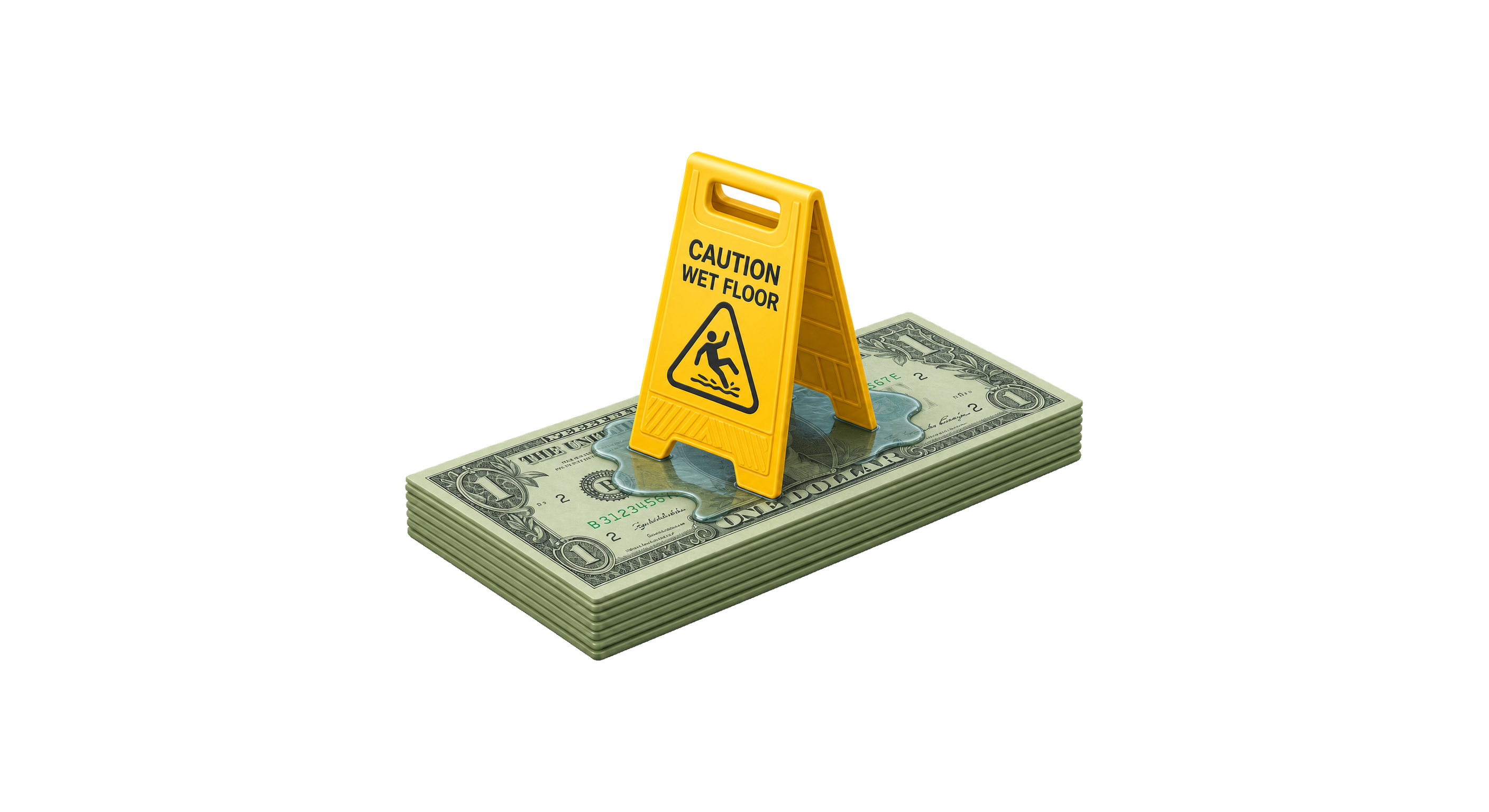
Putting up a “Wet Floor” sign is a smart move for a restaurant, but it’s not a get-out-of-jail-free card. Too many people think that if they see a sign, the business has no responsibility. That’s way too simple. A warning sign is only as good as its warning. Was it visible? Was it placed in a way that actually alerted you to the danger? A tiny, dirty sign kicked into a corner isn’t an adequate warning for a huge spill in a main path.
And besides, if the floor was wet for an unreasonable amount of time, or if an employee caused the spill by mopping and didn’t block the area off correctly, a sign might not be enough to shield them. Think about an employee mopping the whole floor during a packed lunch rush but only putting up one sign at one entrance. If you walk in from another direction and slip, the restaurant could still be on the hook. The sign is one part of their duty to warn, but it doesn’t erase their main job: keeping the property safe and fixing problems. A good sign helps their defense, but it’s not bulletproof. It all comes back to one question: did the restaurant exercise ordinary care?
Myth 4: You Must Have a Witness for Your Slip and Fall Claim to Be Valid
A lot of people give up because they think it’s just their word against the restaurant’s, and without a witness, they’ll lose. A witness who saw you fall is a huge help, of course, but you can still build a strong case without one. Plenty of other evidence can prove what happened in a wet floor slip and fall in Athens.
Visual evidence is powerful. If you can, take pictures or video with your phone right after it happens, show the wet floor, your clothes, the lack of any warning signs. Many restaurants, especially in busy spots like downtown Athens, have security cameras. You have to ask for that footage fast, because many businesses tape over their recordings after just a few days (sometimes only 24-72 hours). Your own detailed and consistent testimony is also evidence. And when you get treated for your injuries at a place like Piedmont Athens Regional Medical Center, those medical records create an objective timeline of the harm you suffered. You need to pull together every piece of evidence you can find to show the full story.
Myth 5: If You Were Wearing “Inappropriate” Shoes, You Can’t Sue
This myth suggests that if you were wearing flip-flops or high heels, you automatically lose your case. While what you were wearing can be a factor, it almost never kills your claim entirely. Georgia uses a legal doctrine called modified comparative negligence, written down in O.C.G.A. Section 51-12-33. This just means if you’re found to be partly at fault for your own fall, your final award gets reduced by your percentage of fault. But you can still recover damages as long as you’re less than 50% responsible.
For instance, a jury might decide you were 20% at fault for wearing old shoes with no tread, but that the restaurant was 80% at fault for not cleaning up a huge, obvious spill for an hour. In that case, you could still get 80% of your total damages. The real question is whether the restaurant’s negligence was a major reason you fell. Did they create a hazard that a normal person, paying a normal amount of attention, wouldn’t have expected to navigate? A restaurant can’t just make its floor dangerous and then blame customers for not coming prepared for an obstacle course. The case will always come back to the restaurant’s legal duty to keep its property safe for customers.
Myth 6: Any Slip and Fall on a Wet Floor is an “Easy Case”
Anyone who thinks a slip and fall is an easy win is dead wrong. The truth is, these are tough cases that restaurant owners and their insurance companies will fight tooth and nail. To prove negligence, and especially to establish the restaurant had actual or constructive notice of the danger, you have to do a ton of investigative work and know Georgia premises liability law inside and out. You don’t just slip, fall, and get a check.
Insurance adjusters have one job: pay you as little as possible. They will pick apart every detail of your story, trying to find a reason to blame you or argue that your injuries aren’t that bad. They’ll say the spill was “open and obvious,” or that you were on your phone and not paying attention. It’s a grind to collect all the evidence you need, incident reports, security video, cleaning logs, employee statements, and every single medical record. And proving your total damages (your medical bills, what you lost from being out of work, your pain and suffering) takes serious documentation and sometimes expert witnesses. Getting through this mess takes experience and a good plan, which is why a lot of people hire a lawyer who handles these kinds of claims in Athens and across Georgia.
When you’re dealing with the fallout of a slip and fall on a wet floor in an Athens restaurant, you need to know the law, not just go by the myths. So, document everything. Get to a doctor. Understand your rights about the notice requirement to protect yourself. If you got hurt, it’s also smart to understand your rights regarding Georgia temporary disability.
Statute of limitations for a slip and fall claim in Georgia?
In Georgia, you generally have two years from the date you were injured to file a lawsuit for a personal injury claim like a slip and fall. This deadline is set by O.C.G.A. Section 9-3-33. If you miss that window, you almost always lose your right to sue for compensation.
Most important evidence to get after a slip and fall?
Right after you fall, the most important evidence is photos you take yourself of the wet floor, your shoes, and the area (especially if there are no warning signs). Get the names and numbers of any witnesses. Make sure an incident report is filed with the restaurant manager, and keep detailed medical records from day one.
Can I have a case if I didn’t report the fall right away?
It’s always better to report it immediately, but failing to do so doesn’t automatically kill your case. It does make it harder to prove, though. The restaurant will argue it never happened. You’ll need other strong evidence to tie your fall and your injuries to their negligence on their property.
What if the restaurant says I was on my phone?
They might try to argue you were distracted and it was your fault. This is a classic comparative negligence defense. Your actions will be weighed against the restaurant’s failure to clean the spill. As long as a jury finds you were less than 50% at fault, you can still recover damages.
How does a restaurant’s cleaning schedule affect my claim?
The cleaning schedule (or the fact that they don’t have one) can be a key piece of evidence for proving constructive notice. An inadequate or ignored cleaning policy makes it much easier to argue that they were negligent and should have found the hazard before you did.



