The accident on I-75 near the Delk Road exit was horrific, a chain reaction involving three commercial trucks and two passenger vehicles. Among the victims was Maria Rodriguez, a lively 34-year-old Marietta resident whose life was irrevocably altered by a severe traumatic brain injury. Her journey, complicated by the intricacies of catastrophic injury claims and the promise of emerging technologies like Brain-Computer Interfaces (BCI), illustrates the complex challenges faced by victims and their families in Georgia.
Key Takeaways
- Catastrophic injury claims in Georgia often involve long-term medical care, including advanced rehabilitation and emerging technologies like BCI, necessitating thorough legal and financial planning.
- The Georgia Motor Vehicle Accident Reparations Act (O.C.G.A. Section 33-34-1 et seq.) and the complexities of establishing liability are central to securing fair compensation for severe injuries.
- Brain-Computer Interface (BCI) technology, while promising for restoring function after injuries, introduces new considerations for future medical costs and quality of life in legal settlements.
- Expert witness testimony from neurologists, rehabilitation specialists, and BCI developers is essential to accurately project future medical needs and the impact of these technologies on a victim’s life.
- Victims of catastrophic injuries in Georgia should seek legal representation experienced in working through intricate medical evidence, liability disputes, and long-term care planning to protect their rights.
The Immediate Aftermath: A Life Changed in a Split Second
Maria’s vehicle, a compact sedan, was crushed between a jackknifed tractor-trailer and another speeding truck. Emergency responders from Cobb County Fire Department worked for over an hour to extricate her from the wreckage. She was transported to Wellstar Kennestone Hospital with critical injuries, including a diffuse axonal injury (DAI), a severe form of traumatic brain injury that often results in long-term cognitive and physical impairments. Her family, reeling from the shock, faced a future filled with uncertainty.
In Georgia, a catastrophic injury is defined broadly in workers’ compensation law (O.C.G.A. Section 34-9-200.1) as an injury that prevents an individual from performing any work. While Maria’s case was a personal injury claim, the medical and life-altering implications mirrored this definition. Her initial prognosis was grim. She was in a coma for weeks, followed by months of intensive inpatient rehabilitation at Shepherd Center in Atlanta, a facility renowned for its brain and spinal cord injury programs. Her progress, while steady, was painfully slow. Maria struggled with severe aphasia, making communication difficult, and significant motor deficits on her left side.
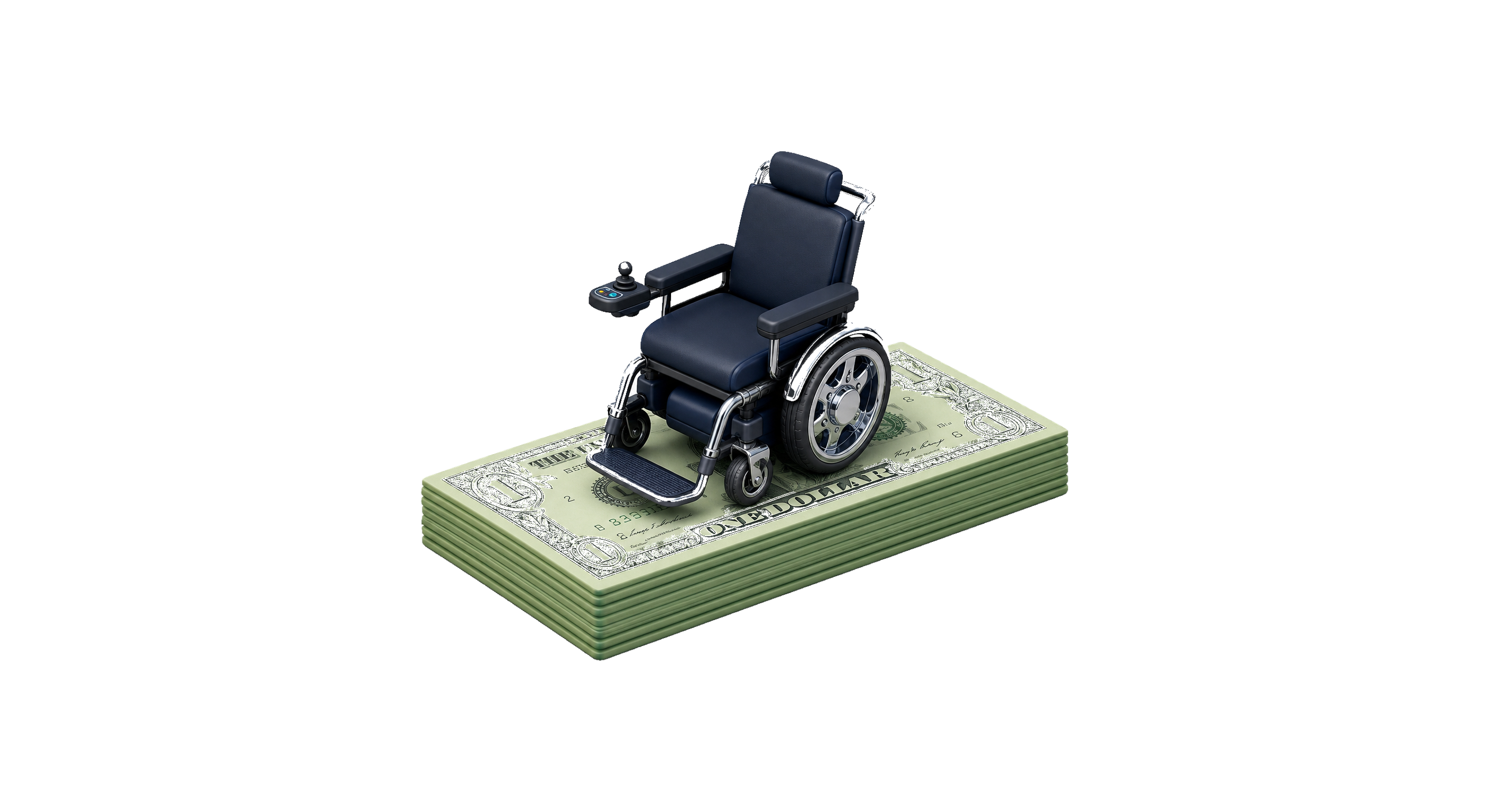
Suffered a serious injury?
Know what your case is worth with AI Catastrophic Payout Calculator for FREE!
Start my free evaluationThe medical bills mounted rapidly. Even with strong health insurance, the out-of-pocket expenses for specialized therapies, medications, and adaptive equipment were overwhelming. This is a common, distressing reality for families facing catastrophic injuries. The financial burden can be as debilitating as the injury itself, which is why understanding the legal avenues for compensation becomes paramount.
Working through the Legal Labyrinth: Liability and Damages in Georgia
Maria’s family, understandably overwhelmed, sought legal counsel to pursue a claim against the at-fault drivers and their respective trucking companies. The first hurdle involved establishing clear liability. According to the Georgia Department of Public Safety, commercial vehicle accidents often involve multiple parties and complex insurance policies. In Maria’s case, investigators determined that one truck driver was driving over the federal Hours of Service regulations, contributing to fatigue, while the second truck was exceeding the posted speed limit. This multi-party liability complicated the initial stages of the claim.
Georgia operates under a modified comparative negligence rule (O.C.G.A. Section 51-12-33). This means that if Maria was found to be even 1% at fault for the accident, her compensation could be reduced proportionally. If she were found 50% or more at fault, she would be barred from recovery entirely. Fortunately, the police report and witness statements strongly indicated she was not at fault, having been a passive victim in the collision.
Involved in a truck accident?
Trucking companies begin destroying evidence within 14 days. Truck accident claims average 3× higher than car accidents.
The damages sought in a catastrophic injury claim extend far beyond immediate medical expenses. They include lost wages, diminished earning capacity, pain and suffering, emotional distress, and future medical care. For someone like Maria, future medical care is not a simple calculation. It involves projecting decades of potential therapies, specialized equipment, and even experimental treatments. This is where emerging technologies, specifically Brain-Computer Interfaces, entered the conversation.
The Promise of BCI: A Glimmer of Hope for Maria
During her rehabilitation, Maria’s neurologist, Dr. Anya Sharma at Emory University Hospital, introduced the concept of Brain-Computer Interfaces. Dr. Sharma explained that BCI technology, though still evolving, holds immense potential for individuals with severe neurological deficits. “A Brain-Computer Interface or BCI,” Dr. Sharma clarified during a family meeting, “is a direct communication pathway between an enhanced or wired brain and an external device. For Maria, this could mean regaining some control over her environment, perhaps even communication, through thought alone.”
The idea was both exciting and daunting. In 2026, several companies are making significant strides in BCI development. Neuralink, for instance, has demonstrated early success in human trials, enabling individuals with paralysis to control external devices with their minds. Similarly, Blackrock Neurotech’s BrainGate system has shown promise in restoring communication and mobility for patients with severe motor impairments. These advancements are pushing the boundaries of what’s possible for individuals living with conditions like Maria’s.
For Maria, the potential benefits were far-reaching. Imagine being able to type a message, control a robotic arm, or even move a wheelchair using only her thoughts. Such capabilities could dramatically improve her quality of life and independence. However, the costs associated with these modern technologies are substantial, often involving initial surgical implantation, ongoing maintenance, and software updates. This presented a significant challenge for her legal team: how do you quantify the cost of a technology that is still rapidly developing and whose long-term impact on a patient’s life is only beginning to be understood?
Quantifying the Future: Expert Testimony and Life Care Plans
To accurately project Maria’s future medical needs, her legal team engaged a team of experts. A life care planner, specializing in catastrophic injuries, developed a complete document outlining all anticipated medical, rehabilitative, and personal care needs for Maria’s projected lifespan. This plan included everything from physical therapy sessions and medication to home modifications and assistive devices. Importantly, it also incorporated the potential for BCI implementation.
Dr. Sharma, Maria’s neurologist, provided expert testimony on the medical necessity and feasibility of BCI for Maria’s specific condition. She detailed the current state of BCI research, the types of systems available, and their potential for improving Maria’s functional outcomes. This involved explaining complex neuroscience in a way that jurors could understand, highlighting the specific brain regions affected by Maria’s DAI and how BCI could bypass those damaged pathways. This is where the intersection of modern medical technology and legal strategy becomes critical.
Plus, a forensic economist was brought in to calculate the present value of Maria’s future medical expenses and lost earning capacity. This calculation is complex, taking into account inflation, interest rates, and Maria’s life expectancy. The inclusion of BCI technology added another layer of complexity, requiring the economist to factor in potential future costs for upgrades, replacements, and new therapeutic applications that might emerge over the next few decades.
The defense, representing the trucking companies, naturally challenged these projections. Their experts argued that BCI was still experimental, its long-term efficacy unproven, and its inclusion in a life care plan speculative. This is a common tactic in catastrophic injury cases involving novel treatments: questioning the certainty of future medical needs. However, Maria’s legal team countered with evidence of ongoing clinical trials and the increasing adoption of BCI in specialized rehabilitation centers, demonstrating that while advanced, it was a credible and increasingly viable option for patients like Maria. They cited the National Institutes of Health (NIH) ongoing support for BCI research, underscoring its scientific legitimacy. According to the NIH, significant federal funding is dedicated to advancing neurotechnology for individuals with paralysis and other neurological disorders.
The Settlement: Securing Maria’s Future
After extensive negotiations, mediation, and the threat of a lengthy trial in Fulton County Superior Court, a settlement was reached. The settlement included a substantial sum to cover Maria’s past and future medical expenses, including a dedicated fund for potential BCI implementation and maintenance. It also provided for her lost income, pain and suffering, and the significant impact on her family. This outcome was proof of the careful preparation of Maria’s legal team, their ability to articulate the deep impact of her injuries, and their foresight in integrating emerging technologies into the damages model.
The settlement allowed Maria to continue her rehabilitation with access to the best available care, including the possibility of a BCI system when she and her medical team deemed it appropriate. It meant her family wouldn’t be burdened by the crushing financial weight of her care and could focus on supporting her recovery. This case underscored a vital truth: in catastrophic injury claims, particularly those involving brain injuries, the legal system must adapt to include the potential of future medical advancements. Ignoring these possibilities would be a disservice to victims and their long-term well-being.
The State Board of Workers’ Compensation in Georgia, while not directly involved in Maria’s personal injury case, provides a framework for understanding how the state grapples with severe injuries. Their guidelines on catastrophic designations, while specific to workers’ comp, reflect a broader societal recognition of the deep and lasting impact of such injuries. The State Board of Workers’ Compensation website details the criteria for catastrophic injury designation, which often includes severe brain injuries.
What We Learn from Maria’s Journey
Maria’s journey from the accident scene on I-75 to a secure future with the promise of BCI technology offers critical lessons. First, catastrophic injury cases demand exceptional legal expertise, especially when working through complex liability scenarios and multi-party claims. Second, future medical care, particularly for brain injuries, must account for rapidly advancing technologies. Attorneys and medical professionals must collaborate to present a complete, forward-looking plan for a victim’s recovery and long-term needs. Finally, securing justice for victims of catastrophic injuries is not just about compensation. It’s about providing the resources necessary for them to rebuild their lives with dignity and hope, embracing every possible avenue for recovery and independence.
What constitutes a catastrophic injury in Georgia?
In Georgia, while specific definitions can vary between personal injury and workers’ compensation law, a catastrophic injury generally refers to an injury that has a permanent and severe impact on an individual’s physical or cognitive abilities, often preventing them from working or performing daily activities. Examples include severe traumatic brain injuries, spinal cord injuries leading to paralysis, major amputations, and severe burns.
How does a Brain-Computer Interface (BCI) assist with catastrophic injuries?
A BCI creates a direct communication pathway between the brain and an external device, bypassing damaged neurological pathways. For individuals with catastrophic injuries like severe paralysis or communication disorders resulting from brain injury, BCIs can enable control of prosthetic limbs, computer cursors, communication devices, or even environmental controls using only their thoughts, potentially restoring significant independence.
Can future BCI costs be included in a personal injury settlement in Georgia?
Yes, future medical costs, including those for emerging technologies like BCI, can be included in a personal injury settlement in Georgia. This requires strong expert testimony from neurologists, life care planners, and forensic economists who can credibly project the medical necessity, feasibility, and costs associated with such advancements over the victim’s lifetime, even if the technology is still evolving.
What specific Georgia laws apply to catastrophic injury claims?
Catastrophic injury claims in Georgia involve several state laws. Key among them are the Georgia Motor Vehicle Accident Reparations Act (O.C.G.A. Section 33-34-1 et seq.) for car accidents, O.C.G.A. Section 51-12-33 for modified comparative negligence, and O.C.G.A. Section 9-11-9.1 regarding affidavit requirements for medical malpractice claims (though not directly applicable to a car accident, medical aspects of treatment are critical). The Official Code of Georgia Annotated (O.C.G.A.) outlines the legal framework for personal injury claims.
Why is expert testimony important in catastrophic injury cases involving BCI?
Expert testimony is important because BCI technology is complex and still developing. Neurologists can explain the medical rationale and potential benefits for the specific injury. Life care planners quantify the associated costs. Forensic economists project long-term financial implications. These experts provide the necessary scientific and financial foundation to convince insurers or a jury that including future BCI costs in a settlement is reasonable and necessary for the victim’s well-being.