
There’s a ton of bad information out there about restaurant slip and falls, especially when it comes to who’s liable and what actually counts as negligence. People in Augusta hear stories and assume they know how these cases work, but the legal truth is often completely different. This kind of thinking can obscure your rights if you slip in a restaurant bathroom in Augusta.
Key Takeaways
- Under O.C.G.A. Section 51-3-1, property owners in Georgia are required to exercise ordinary care in keeping their premises safe.
- Take photos of the hazard and surroundings right after a slip. This evidence strengthens any potential claim.
- Restaurants need set procedures for bathroom checks and cleanups, and failing to follow them can show negligence.
- Get medical help right away for any slip and fall injuries, because delays make it harder to prove the fall caused them.
- The “open and obvious” defense can derail a claim, so a plaintiff has to show they didn’t know about the hazard or couldn’t have avoided it.
Myth 1: If I fell, the restaurant is automatically responsible.
This is a common myth. A lot of folks think that if you fall on their property, the owner is automatically on the hook. Georgia law is more nuanced. According to O.C.G.A. Section 51-3-1, a business owes you “ordinary care” to keep the place safe. They aren’t insurers of your safety. They just have to take reasonable steps to fix or warn you about dangers they should know about. To win a case for a slip in an Augusta restaurant bathroom, you have to prove the restaurant was negligent. This means showing they either caused the dangerous condition, knew about it and did nothing, or *should* have known about it if they were doing their job (that’s “constructive knowledge”). For instance, if another customer spills a drink and you fall 30 seconds later, the restaurant probably isn’t liable because they had no time to find it. But if a toilet has been leaking for over an hour and nobody’s mopped it up or put a sign down, that’s a classic breach of care. The injured party has to prove the restaurant’s negligence, which often means showing they had terrible maintenance procedures or just weren’t following them.
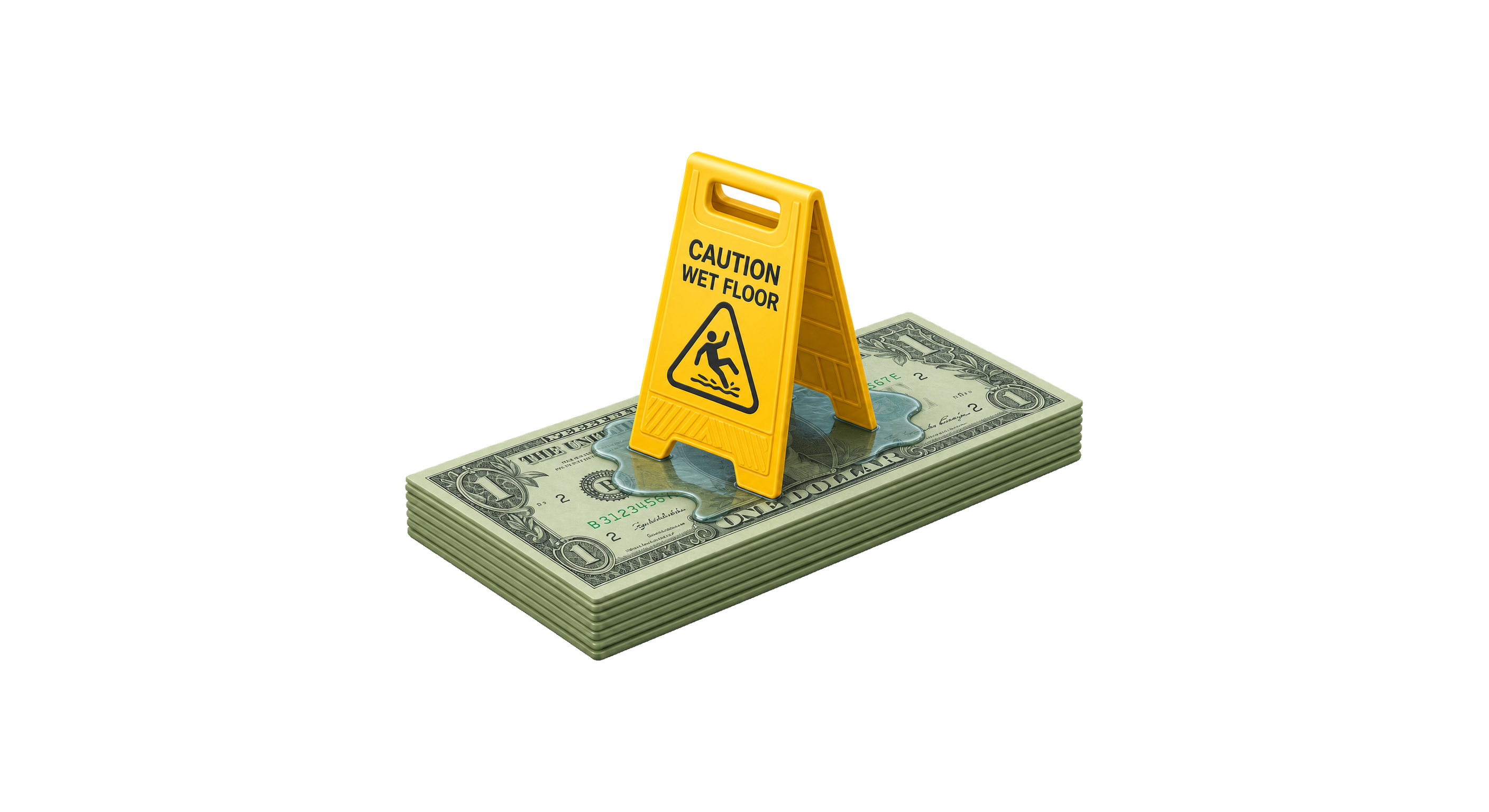
Myth 2: I can’t claim anything if there wasn’t a “Wet Floor” sign.
A missing “Wet Floor” sign definitely helps your case, but it’s not the only thing that matters for liability. The sign is just a warning, and its absence points to a failure to warn. A restaurant’s duty extends beyond just putting up a sign. They must maintain a safe environment. Let’s say an Augusta restaurant’s bathroom has a toilet that’s always leaking, a fact the staff is well aware of, but they only sometimes bother to put out a sign. If you slip on water from that leak when there’s no sign, the restaurant’s ongoing knowledge of the problem combined with their inconsistent warnings could easily make them liable. On the other hand, what if there was a sign? Was it hidden behind a trash can or put out after the puddle had been there for an hour? The effectiveness of the warning matters. The core issue is whether the restaurant exercised ordinary care. A legal brief filed with the Supreme Court of Georgia on this very topic clarifies that the focus is on whether the owner “had superior knowledge of the hazard” and failed to either fix it or warn you about it properly.
Injured in a slip & fall?
Know what your case is worth with AI Slip & Fall Payout Calculator for FREE!
Start my free evaluationMyth 3: My injuries don’t seem serious, so it’s not worth pursuing.
People often blow off what seems like a minor fall, but that can be a huge mistake. A simple slip can cause chronic back problems, a torn meniscus in your knee, or a concussion whose worst symptoms don’t show up for days. Adrenaline from the shock of the fall can mask pain, making people think they’re fine when they have a serious underlying injury. A stiff neck can turn into a herniated disc that needs months of physical therapy or surgery. That’s why you have to get checked out by a doctor immediately after any fall, even if you think you’re okay. Go to an Augusta urgent care, like AU Health Urgent Care on Walton Way, or see your own doctor to get your condition documented. That medical record, created right after the incident, is invaluable. Without a prompt evaluation, the restaurant’s insurance company will argue your injuries happened later or that you had a pre-existing condition. A clear medical timeline proves the fall caused your injuries and shows how bad they really are.
Myth 4: If I saw the water, I can’t claim anything because it was “open and obvious.”
The “open and obvious” doctrine is a go-to defense for property owners in Georgia. The argument claims that if a hazard was so obvious that any reasonable person would have seen and avoided it, the owner isn’t liable. This defense doesn’t always prevent recovery, though. The real question is whether you knew as much or more about the danger than the property owner did. Imagine you’re in a dimly lit Augusta restaurant bathroom, a puddle on a dark-tiled floor might be there, but it’s hardly “obvious.” Or maybe the hazard was visible, but you were distracted trying to juggle your purse and help your kid wash their hands. In those situations, your knowledge isn’t “equal or superior” to the owner’s, especially if they already knew about the bad lighting or that the sink always splashes water onto the floor. The Georgia Court of Appeals has looked at these cases again and again, considering factors like lighting, distractions, and the specific nature of the hazard. Your whole case can hinge on proving you couldn’t have reasonably seen or understood the danger.
Myth 5: Restaurants don’t have to clean their bathrooms constantly.
No, a restaurant doesn’t need an employee living in the bathroom with a mop. But they absolutely have a duty to create and follow a reasonable inspection schedule. This demonstrates ordinary care. A restaurant in Augusta that cleans its bathrooms once at closing time, no matter how busy it gets, is probably acting negligently if a spill from lunchtime causes someone to fall at 3 p.m. What’s a “reasonable” schedule? It depends on things like the restaurant’s size, how many customers it has, and the time of day. A packed restaurant on a Saturday night needs far more frequent checks than a sleepy cafe on a Tuesday morning. Many places use bathroom inspection logs where employees are supposed to initial every hour. When those logs are missing, sloppy, or just don’t exist, it’s a huge red flag for negligence. You can even reference regulations from the Georgia State Board of Health’s Department of Public Health, which sets baseline standards for cleanliness in public restrooms, to show what’s expected.
Myth 6: I need to confront the manager and get them to admit fault.
After a fall, your first move isn’t to get a confession from the manager. It’s to look after yourself. You should definitely report the fall to a manager or employee, but don’t say things like “I should have been more careful,” which they can use against you later. Just state the facts: you fell, you’re hurt, and you want an incident report filed. Then, document the scene. If you’re able, use your phone to take pictures and videos of what caused you to fall. Get wide shots of the area, close-ups of the spill or hazard, and note whether there were any warning signs. If anyone saw what happened, get their name and phone number. This kind of objective evidence is much more powerful than trying to pin down a manager who will probably be trained to admit nothing and may later deny what they said. Remember, their job is to protect the business. Getting the facts on record is your job. Understanding these common myths is the first step for anyone who has a slip and fall in an Augusta restaurant bathroom. Knowing your rights and how the law actually works can make all the difference in your claim’s outcome.
What specific Georgia law governs slip and fall incidents in restaurants?
It’s mainly O.C.G.A. Section 51-3-1. This law sets the “ordinary care” standard, meaning property owners have to keep their place reasonably safe for customers (invitees).
How quickly do I need to report a slip and fall to the restaurant?
Tell management as soon as you can, right after you’ve handled any immediate medical needs. Reporting it fast creates an official record and locks in the timeline of what happened.
What kind of documentation should I collect after a slip and fall in a restaurant bathroom?
Snap photos and videos of everything, the spill, the floor, your injuries. Get names and numbers of anyone who saw it happen. Make sure the restaurant files an incident report, and save all your medical paperwork and bills.
Can I still have a claim if I was partially at fault for the fall?
Yes, you might. Georgia uses a modified comparative negligence rule. As long as you’re found to be less than 50% at fault, you can still get damages, but the amount will be reduced by your share of the blame.
What is “constructive knowledge” in the context of a restaurant slip and fall?
This means the restaurant *should have known* about the hazard, even if no employee spotted it directly. If a reasonable inspection schedule would have caught the problem, the law considers them to have had constructive knowledge of it.



